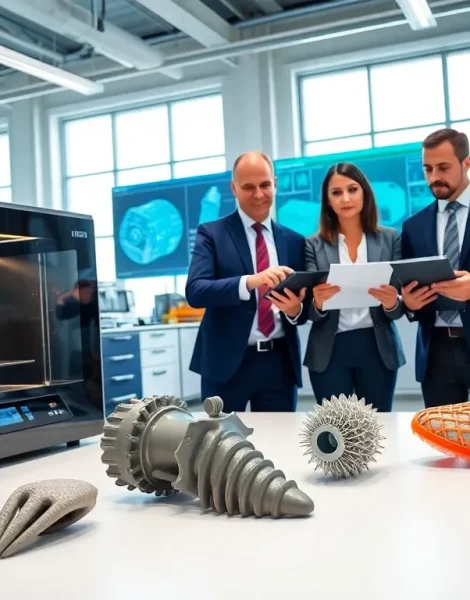
3D printing examples now appear across nearly every major industry. From custom prosthetics to rocket engine parts, this technology has moved far beyond novelty prototypes into genuine production use. What started in research labs during the 1980s has become a $20 billion global market that continues to grow each year.
The appeal is simple: 3D printing creates objects layer by layer from digital designs. This process eliminates many traditional manufacturing constraints. Companies can produce complex geometries, reduce material waste, and customize products for individual needs. The following sections explore how different sectors apply this technology to solve real problems and create new possibilities.
Table of Contents
ToggleKey Takeaways
- 3D printing examples span healthcare, aerospace, automotive, fashion, construction, and education—demonstrating the technology’s versatility across industries.
- Medical applications like custom prosthetics, surgical planning models, and bioprinted tissues showcase how 3D printing improves patient outcomes and reduces costs.
- Aerospace giants like SpaceX and GE Aviation use 3D printing to create lighter, stronger components that outperform traditionally manufactured parts.
- Consumer brands including Adidas and New Balance now sell products with 3D printed elements, bringing mass customization to everyday goods.
- Construction companies can 3D print full-scale buildings in days, dramatically reducing build times and labor costs compared to traditional methods.
- Rapid prototyping with 3D printing allows engineers and designers to test physical concepts quickly, catching flaws early and accelerating product development.
Healthcare and Medical Applications
Healthcare provides some of the most compelling 3D printing examples available today. Medical professionals use this technology to improve patient outcomes in ways that were impossible just a decade ago.
Custom Prosthetics and Orthotics
Traditional prosthetic limbs require expensive molds and lengthy fitting processes. 3D printing changes this equation entirely. Technicians scan a patient’s residual limb, create a digital model, and print a custom-fitted prosthetic within days. Organizations like e-NABLE have produced thousands of 3D printed hands for children at a fraction of conventional costs.
Surgical Planning Models
Surgeons now print exact replicas of patient anatomy before complex procedures. A cardiac surgeon might hold a 3D printed model of a patient’s heart to plan a difficult repair. These models improve surgical precision and reduce operating time.
Bioprinting and Tissue Engineering
Researchers are pushing boundaries with bioprinting, using living cells as “ink” to create tissue structures. Labs have successfully printed skin grafts, cartilage, and even small organs. While full organ printing remains years away, these 3D printing examples point toward a future where transplant waiting lists might shrink dramatically.
Aerospace and Automotive Manufacturing
Aerospace and automotive companies have embraced 3D printing for both prototyping and end-use parts. The technology offers weight reduction, design freedom, and faster development cycles.
Rocket and Aircraft Components
SpaceX prints SuperDraco engine chambers using a nickel-based superalloy. This approach produces parts that would require extensive welding with conventional methods. GE Aviation prints fuel nozzles for jet engines that combine 20 separate components into a single piece. These 3D printing examples demonstrate real performance gains: the printed nozzles are 25% lighter and five times more durable than their predecessors.
Automotive Prototyping and Production
Car manufacturers use 3D printing at every development stage. Ford prints thousands of prototype parts annually, cutting weeks from design validation. BMW produces custom fixtures and tools for its assembly lines. Bugatti has printed titanium brake calipers that weigh 40% less than aluminum alternatives.
Spare Parts on Demand
Both industries benefit from on-demand production. Airlines can print replacement cabin components rather than stocking physical inventory. Classic car restorers can recreate discontinued parts from digital files. This capability transforms supply chains and reduces warehousing costs.
Consumer Products and Fashion
3D printing examples in consumer goods range from mass-customized products to avant-garde fashion pieces. The technology enables personalization at scales that traditional manufacturing cannot match.
Custom Footwear
Adidas sells running shoes with 3D printed midsoles through its 4DFWD line. Each midsole features lattice structures optimized for energy return. New Balance and other brands offer similar products. Runners benefit from designs that would be impossible to mold using conventional techniques.
Eyewear and Accessories
Companies like Materialise produce custom-fit eyeglass frames based on facial scans. The frames fit better and use less material than standard sizes. Jewelry designers print intricate pieces in metal and resin that would take skilled craftsmen weeks to create by hand.
Fashion and Wearables
Designers have showcased 3D printed dresses, shoes, and accessories on major runways. Iris van Herpen creates sculptural garments that blur the line between clothing and art. These pieces demonstrate what becomes possible when traditional fabric constraints disappear. While most 3D printed fashion remains high-concept, practical applications like custom athletic gear and protective equipment continue to grow.
Architecture and Construction
3D printing examples in construction have moved from small models to full-scale buildings. This shift promises faster construction, reduced labor costs, and new design possibilities.
Scale Models and Visualization
Architects have printed scale models for decades. Modern printers produce detailed representations of proposed buildings complete with interior features. Clients can hold a physical model of their future home or office, making design discussions more concrete.
Full-Scale Building Construction
Several companies now print entire structures using concrete or similar materials. ICON has printed homes in Texas and Mexico using its Vulcan construction system. These houses can be completed in days rather than months. In Dubai, the government office building printed by Apis Cor demonstrates that 3D printed structures can meet commercial building standards.
Complex Architectural Elements
Printing enables shapes that would be prohibitively expensive with traditional formwork. Curved walls, organic facades, and intricate structural elements become economically feasible. The technology excels at producing unique components, bridge segments, decorative panels, or custom fixtures, that would otherwise require extensive handcrafting.
Education and Prototyping
3D printing examples in education and product development highlight how the technology accelerates learning and innovation. Students and engineers alike benefit from rapid physical iteration.
STEM Education
Schools use 3D printers to teach design thinking, engineering principles, and spatial reasoning. Students can design a bracket in CAD software and hold the physical result within hours. This immediate feedback loop reinforces concepts that remain abstract in traditional instruction. Anatomy classes print bone models. Geography students print terrain maps. The applications span every discipline.
Rapid Prototyping
Product designers iterate faster when they can test physical concepts quickly. A consumer electronics company might print dozens of case variations before committing to tooling. Each iteration costs a few dollars in material rather than thousands in mold modifications. This approach catches design flaws early when changes remain inexpensive.
Functional Testing
Modern 3D printing materials allow functional prototypes, not just visual models. Engineers print working hinges, snap-fit assemblies, and flexible components. Some printers produce metal parts suitable for stress testing. These capabilities compress development timelines and improve final product quality.